
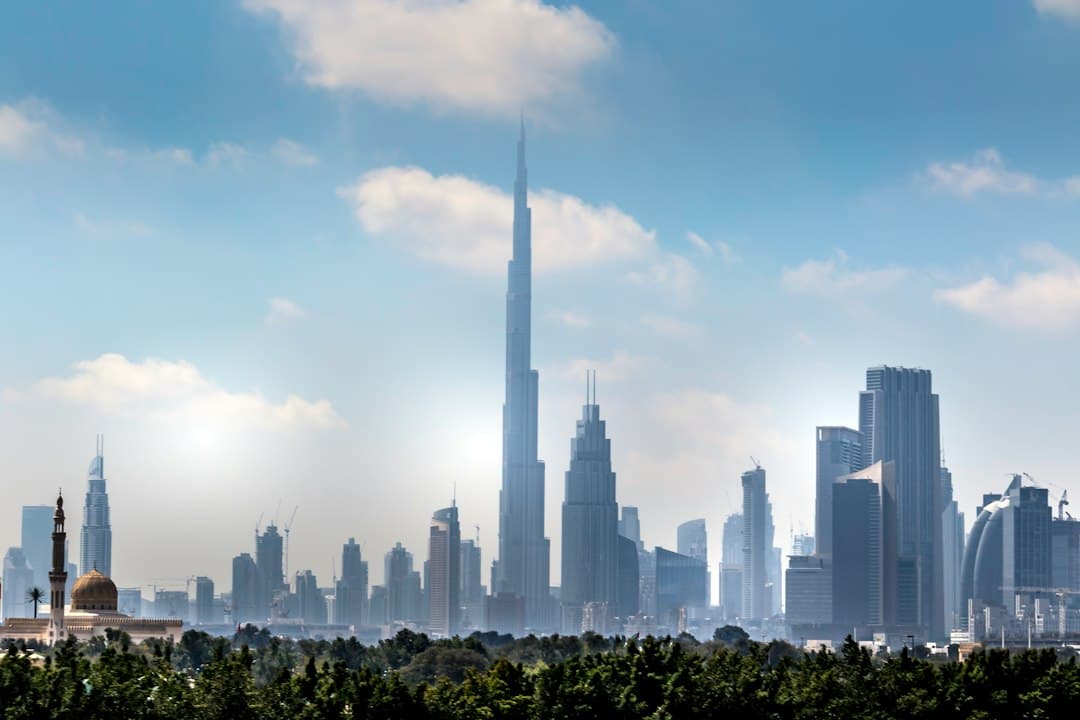
International City remains one of Dubai's most affordable residential zones for entry-level buyers and investors seeking cheap studios and one-bedroom apartments. The area offers competitive pricing—often 15–25% below comparable units in established neighbourhoods like Jumeirah Village Circle or Business Bay—making it attractive for first-time purchasers and buy-to-let investors targeting rental income. However, 2026 buyers must carefully evaluate whether International City's affordability justifies its trade-offs: distance from Dubai's core business districts, infrastructure maturity, capital appreciation potential, and market saturation among competing budget-friendly zones like Arjan and Dubai South.
What Makes International City Affordable?
International City's pricing advantage stems from its location and masterplan timing. Developed primarily by Nakheel Properties as part of a larger mixed-use vision, the community sits inland, roughly 30–40 km from Dubai's waterfront precincts. This distance from prime retail, hospitality, and financial clusters directly translates to lower land costs, which developers pass on to buyers through reduced unit prices.
A typical studio apartment in International City ranges from AED 280,000 to AED 380,000, while a one-bedroom unit costs between AED 400,000 and AED 550,000—significantly lower than comparable apartments in Jumeirah Village Circle (AED 500,000–700,000) or Jumeirah Lake Towers (AED 550,000–750,000). Two-bedroom apartments typically range from AED 650,000 to AED 850,000, making the community an obvious choice for investors chasing yield over location prestige.
Supply density also keeps prices competitive. With multiple residential phases and a high unit count relative to demand, buyer choice is abundant, and sellers often negotiate aggressively—particularly in slower phases or for cash transactions.
Rental Yields and Investment Viability
International City's true appeal to buy-to-let investors lies in its rental yield potential. The area attracts a steady tenant base of young professionals, expatriate families on tight budgets, and business owners seeking affordable accommodation near the Dubai Wholesale Market or port-adjacent logistics operations.
Realistic annual gross rental yields for International City properties average 5–6.5%—comparable to or slightly better than mature communities. For example, a studio purchased at AED 320,000 might command AED 20,000–21,000 annually; a one-bedroom at AED 480,000 could yield AED 30,000–32,000 per annum. Over a 10-year hold, consistent occupancy and modest annual rent growth can deliver solid cumulative returns, particularly if the buyer purchases below asking price.
However, this yield advantage erodes if capital appreciation stalls. Unlike established precincts such as Downtown Dubai or Dubai Hills Estate, where property values have historically appreciated 3–5% annually, International City has seen flat or negative appreciation in recent cycles. Buyers should not assume significant capital gains; instead, they should treat the purchase as an income-focused strategy.
Infrastructure, Amenities, and Connectivity
International City has matured significantly since its launch. The community now includes:
- Multiple supermarkets and retail outlets (Spinneys, Carrefour franchises)
- Schools and nurseries catering to expatriate families
- Healthcare clinics and dental practices
- Mosques, prayer facilities, and community centres
- Parks, playgrounds, and modest recreational amenities
- Multiple bus routes connecting to Downtown Dubai and neighbouring areas
That said, International City remains primarily a residential dormitory. Dining, entertainment, and lifestyle options are limited compared to vibrant mixed-use precincts like City Walk or waterfront communities. Commuting to Dubai's financial district (DIFC, Downtown) typically requires 45–60 minutes by road, and public transport links, while functional, are less frequent than metro-served areas.
For owner-occupiers working in central Dubai, this commute represents a genuine quality-of-life trade-off. For investors who never visit their rental units, connectivity matters less—tenants accept the location for the price.
Market Saturation and Competition
2026 buyers must contend with significant market saturation. International City has been fully developed for over a decade, meaning resale inventory is plentiful and new listings appear regularly as investors liquidate holdings or move on to newer communities. This abundance of choice benefits buyers in the moment—sellers compete, prices hold steady—but makes future capital appreciation unlikely.
Additionally, newer budget-friendly zones have emerged. Dubai South, developed by Emaar and South Developments, offers similarly affordable apartments (sometimes slightly lower pricing) but with a modern masterplan, proximity to planned retail and logistics hubs, and perceived upside potential tied to Al Maktoum International Airport expansion. Arjan, in Mirdif, delivers comparable affordability with better metro connectivity and closer access to Dubai's commercial core.
Savvy investors now compare International City directly against these alternatives—and often choose emerging communities where newness and infrastructure momentum justify a modest price premium.
Ownership, DLD Transfer, and Financing
International City properties are freehold and freely financeable for foreign buyers. UAE banks readily mortgage International City units at loan-to-value ratios of 80–85% (studios and one-bedrooms), and lending rates track closely to Downtown Dubai or JLT.
DLD transfer fees and registration costs are standardized across Dubai. A buyer purchasing a AED 400,000 studio would pay approximately AED 8,000–10,000 in DLD transfer fees (2–2.5% of purchase price), plus AED 570 for registration and a real-estate agent commission of 2–4% (paid by the seller, though factored into the overall deal negotiation). Use our Dubai Property Fees Calculator to model exact costs for your intended purchase price.
Financing is straightforward, though interest rates have risen; buyers should expect mortgage rates of 4.5–5.5% depending on bank and loan structure. Compared to international markets, UAE financing remains competitive and transparent—no hidden fees or notary charges, only DLD-registered transfer protocols.
Who Should Buy in International City in 2026?
International City suits specific buyer profiles:
- Budget-conscious first-time buyers: Those entering Dubai's property market for owner-occupation and willing to accept longer commutes in exchange for affordability and a proven residential environment.
- Yield-focused investors: Buy-to-let purchasers confident in rental demand and seeking stable 5–6% gross yields without capital appreciation expectations.
- Portfolio diversifiers: Investors already holding premium assets (Downtown, Marina) who view International City as a lower-risk, income-generating satellite holding.
- Expat families with modest budgets: Relocating professionals seeking furnished or semi-furnished family accommodation near schools and retail, with willingness to endure commutes.
International City is not suitable for speculative capital-gain investors, lifestyle-focused owner-occupiers seeking walkability and vibrant amenities, or those requiring short commutes to central business districts.
Comparing International City to Peer Communities
To contextualize 2026 decisions, consider how International City stacks against direct competitors:
- vs. Arjan: International City is slightly cheaper per square metre but Arjan has superior metro access and newer infrastructure. Arjan is winning with first-time buyers who prioritize connectivity.
- vs. Dubai South: Dubai South is comparably priced but perceived as an emerging play with airport upside; International City is stable but shows no growth catalysts.
- vs. JVT/JVC: Jumeirah Village Circle is 20–30% pricier but offers superior walkability, community cohesion, and modern amenities that justify the premium for owner-occupiers.
- vs. Business Bay: Business Bay trades 25–40% higher but delivers waterfront proximity, metro access, and proven capital appreciation—worth the premium for investors with larger budgets.
Across all comparisons, International City wins on entry price but loses on location advantage, growth perception, and amenity density.
Key Considerations Before Purchasing
Before committing capital to International City in 2026, conduct due diligence:
- Verify unit specifications: Inspect finishes, layout efficiency, and balcony/terrace features—older phases may feel dated compared to newer developments.
- Assess rental demand: Tour completed units as furnished rentals; confirm occupancy rates and tenant profiles to validate yield assumptions.
- Evaluate commute reality: Drive or use transit during rush hours; many first-time buyers underestimate the impact of a 50-minute daily commute.
- Review developer reputation: International City is Nakheel-developed (a respected master developer), but ownership may have transferred—confirm current management and maintenance standards.
- Check comparables: Browse resale listings on Bayut, Property Finder, and Immoworld DXB to confirm pricing trends and absorption rates.
Final Verdict: Is International City Worth Buying in 2026?
International City remains a viable choice for specific buyer profiles but is no longer Dubai's default affordable entry point. Its core strengths—genuine affordability, proven rental demand, and freehold ownership—persist. However, emerging competitors (Dubai South, Arjan), evolving buyer preferences toward walkability and modern amenities, and flat capital appreciation make International City a pragmatic, conservative play rather than an exciting opportunity.
For yield-focused investors with realistic expectations (5–6% annual returns, zero capital gain), International City delivers reliable income. For first-time buyers prioritizing lowest cost, it remains competitive—but they should compare Arjan and Dubai South first, as newer infrastructure and fresher finishes may justify a 5–10% price premium.
For lifestyle-focused owner-occupiers and speculative investors, look elsewhere. The community has aged gracefully but hasn't evolved; newer precincts across Dubai are repositioning the market's centre of gravity toward mixed-use, connected, experience-led neighbourhoods—not dormitory zones on the periphery.
Ready to explore International City inventory or compare with alternative communities? Contact Immoworld DXB's advisory team to receive curated property recommendations aligned with your budget, investment timeline, and lifestyle priorities. Our consultants can model rental yields, calculate exact DLD transfer fees, and guide you through Dubai's purchase process from enquiry to handover.