
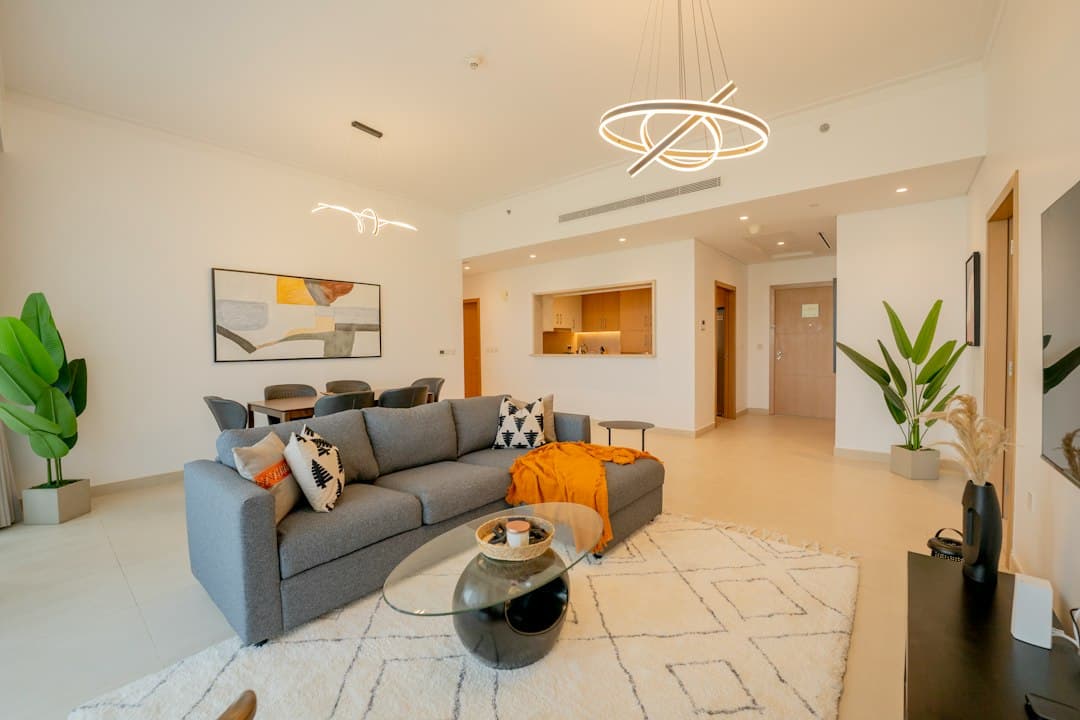
For most expats arriving in Dubai for their first year, renting furniture is more practical than buying outright. Rental costs typically range from AED 1,500–4,500 per month for a fully furnished one- or two-bedroom apartment, versus AED 25,000–100,000+ to purchase furniture. Renting eliminates delivery costs, maintenance responsibility, and the hassle of selling when you leave. However, if your contract extends beyond 18–24 months or you plan to stay permanently, buying becomes financially smarter and offers better value. The decision ultimately hinges on three factors: lease duration, budget flexibility, and whether you'll keep the furniture if you relocate.
The Real Cost of Renting Furniture in Dubai
When you rent a furnished apartment in Dubai, the monthly rent typically includes basic furniture—bed, sofa, dining table, kitchen essentials, and often a TV. This all-in price removes the guesswork from initial setup costs and spreads expenses across your lease period.
A furnished one-bedroom apartment in established communities like Business Bay or Jumeirah Village Circle ranges from AED 2,500–4,500 per month. Studios in emerging areas like Dubai South or Meydan Horizon cost AED 1,500–2,500 monthly. Over 12 months, that's AED 18,000–54,000 total in rental payments—but this covers your entire living setup, not just furniture alone.
The real advantage of renting: no hidden costs. No delivery surcharges (often AED 500–2,000 in Dubai), no assembly fees, no damage deposits (some retailers require AED 2,000–5,000 upfront), and no disposal costs when you leave. If a bed frame breaks or a chair needs repair, the landlord or managing agent typically handles it. Your financial risk is minimal.
The Long-Term Cost of Buying Furniture
Buying furniture for a one- or two-bedroom apartment in Dubai typically costs AED 25,000–100,000, depending on quality and where you shop.
- Budget option (IKEA, PAN Home): AED 15,000–35,000 — basic but functional furniture that lasts 3–5 years.
- Mid-range option (Marina Home, The One): AED 35,000–60,000 — better quality, modern designs, 5–10 year lifespan.
- Premium option (LUX, high-street boutiques): AED 60,000–100,000+ — designer pieces, superior craftsmanship, 10+ years.
Beyond furniture, you'll need to budget for:
- Delivery and assembly (AED 1,500–3,500)
- Temporary protection deposits at some stores (refundable, AED 2,000–5,000)
- Minor repairs, replacement parts, or touch-ups (AED 500–2,000 over 2–3 years)
- Storage or disposal costs when relocating (AED 1,000–3,000)
The upfront commitment is substantial. However, once that investment is made, your monthly housing cost drops significantly—you're only paying rent, not rent plus a furniture premium.
When Renting Furniture Makes Financial Sense
Lease under 18 months: If your employment contract or residency plan spans less than 18 months, renting is almost always cheaper. The cost of buying, assembling, and then disposing of furniture usually exceeds the rental premium you'd pay.
Uncertainty about staying: Job security in Dubai can shift. If you're unsure whether you'll renew your contract or relocate to another emirate, renting avoids being stuck with furniture you can't sell quickly. Second-hand furniture markets exist (Facebook Marketplace, Dubizzle), but resale typically recovers only 40–60% of purchase price.
Budget flexibility matters: Renting spreads costs evenly across 12 months. For expats managing currency exchange, remittances, or multiple financial commitments, monthly predictability often outweighs upfront expense.
You value convenience: If you prioritize ease over cost—setup, maintenance, replacement—renting eliminates friction. This is especially relevant for busy professionals or families managing multiple apartments across emirates.
When Buying Furniture Wins
Lease of 2+ years or permanent residency: Once your timeline extends beyond 24 months, buying breaks even financially and becomes the better investment. A AED 50,000 furniture purchase amortized over 30 months costs roughly AED 1,667 per month—undercutting furnished rental premiums by AED 800–2,500 monthly.
You have a specific aesthetic vision: Furnished apartments often come with generic, mismatched pieces. If you want a cohesive design or specific finishes, buying gives you complete control. This matters especially if you're entertaining professionally or prioritize your living environment's visual impact.
You plan to move within Dubai (not leave the Emirates): Transferring furniture between apartments within Dubai costs AED 2,000–4,000, compared to international relocation costs of AED 10,000+. If you're upgrading within Dubai after 2–3 years, buying initial furniture and moving it is often more economical than renting continuously.
You're building permanent roots: Expats settling in Dubai long-term—obtaining a golden visa, launching a business, or establishing family residency—benefit from owning furniture. It signals investment and allows you to build a home environment incrementally, upgrading pieces as your situation stabilizes.
Quality and Durability: A Hidden Cost Factor
Furnished rental apartments typically include lower-quality, turnover-focused furniture designed for durability in high-traffic settings, not comfort or aesthetics. Sofas may feel stiff, beds basic, and finishes utilitarian. This is intentional—landlords prioritize replacing worn items cheaply rather than investing in premium pieces.
If you're sensitive to sleep quality, sitting comfort, or living-space aesthetics, budget furniture from retailers like IKEA, PAN Home, or Marina Home still offers better personal comfort than furnished-rental stock—and the purchase cost often justifies the quality upgrade for stays exceeding 18 months.
Hybrid Approach: Rent Core, Buy Comfort Items
Many Dubai expats adopt a middle strategy: rent a furnished apartment, then purchase key items that affect daily quality of life—a premium mattress topper (AED 1,500–3,000), ergonomic office chair (AED 2,000–5,000), or high-quality bedding (AED 1,500–2,500). This approach costs AED 5,000–10,000 extra but dramatically improves living comfort while maintaining rental flexibility.
When you relocate, these items travel with you or resell reasonably well secondhand. The psychology matters too: personalizing a rented space—even with small, portable items—increases satisfaction without the commitment of buying full furniture sets.
The Practicality of Selling Used Furniture in Dubai
Dubai's secondhand furniture market is active but competitive. Platforms like Dubizzle, Facebook Marketplace, and local moving company networks offer resale channels. However, realistic expectations are important:
- Expect to recover 40–55% of original purchase price for gently used items.
- Negotiation is standard—factor in 10–20% haggling.
- IKEA and budget-brand furniture resells slower than mid-range or designer pieces.
- Selling takes 2–6 weeks on average; urgent sales may require deeper discounts.
- Logistics (buyer pickup, small shipping) are the buyer's responsibility in most cases.
If you buy AED 50,000 in furniture and resell at 50% recovery, you net AED 25,000. Spread across 30 months, that's a net cost of roughly AED 833 per month—still competitive with rental premiums, but with higher upfront capital and resale hassle.
Key Decision Framework
Choose renting if:
- Your lease is under 18 months.
- You're uncertain about staying in Dubai or extending your contract.
- You prioritize simplicity and predictable monthly costs.
- You're relocating internationally after this stint.
- Your budget is tight and upfront capital is limited.
Choose buying if:
- Your lease or plans extend beyond 24 months.
- You have specific aesthetic or comfort requirements.
- You're upgrading within Dubai (moving between communities) rather than leaving.
- You have upfront capital available and want long-term value.
- You've secured longer-term residency (golden visa, business establishment).
Community-Specific Considerations
Your choice may also depend on where you're settling. Communities with high expat turnover—like Jumeirah Village Circle and Dubai South—have robust furnished rental markets and lower-cost secondhand furniture availability, which can support the renting choice. More established areas like Business Bay or Downtown Dubai have higher furnished-rental premiums, which may favor buying for longer-term residents.
If you're considering property ownership alongside the furniture question, explore Immoworld DXB's full property listings to understand neighborhood rental patterns and community lifecycle—this context helps inform your furniture strategy.
Conclusion: Make Your Decision Based on Timeline and Intent
Renting furniture in Dubai is smarter for your first 12–18 months if you're uncertain about staying, want to minimize upfront costs, or value simplicity. It's a low-risk way to establish yourself while exploring neighborhoods and determining your long-term fit in the emirate. Buying becomes the better choice once your timeline extends beyond 24 months or your residency plans solidify—the long-term cost savings and lifestyle control justify the initial investment.
The hybrid approach—renting a furnished apartment while purchasing a few high-value comfort items—offers the best of both worlds for many expats and is worth considering seriously.
Whatever you choose, plan it intentionally rather than defaulting to furnished rentals out of convenience. A 30-minute cost calculation now will save you thousands of dirhams and stress later. If you're also exploring property ownership or longer-term residency connect with Immoworld DXB's advisory team to align your furniture strategy with your broader Dubai living plan.