
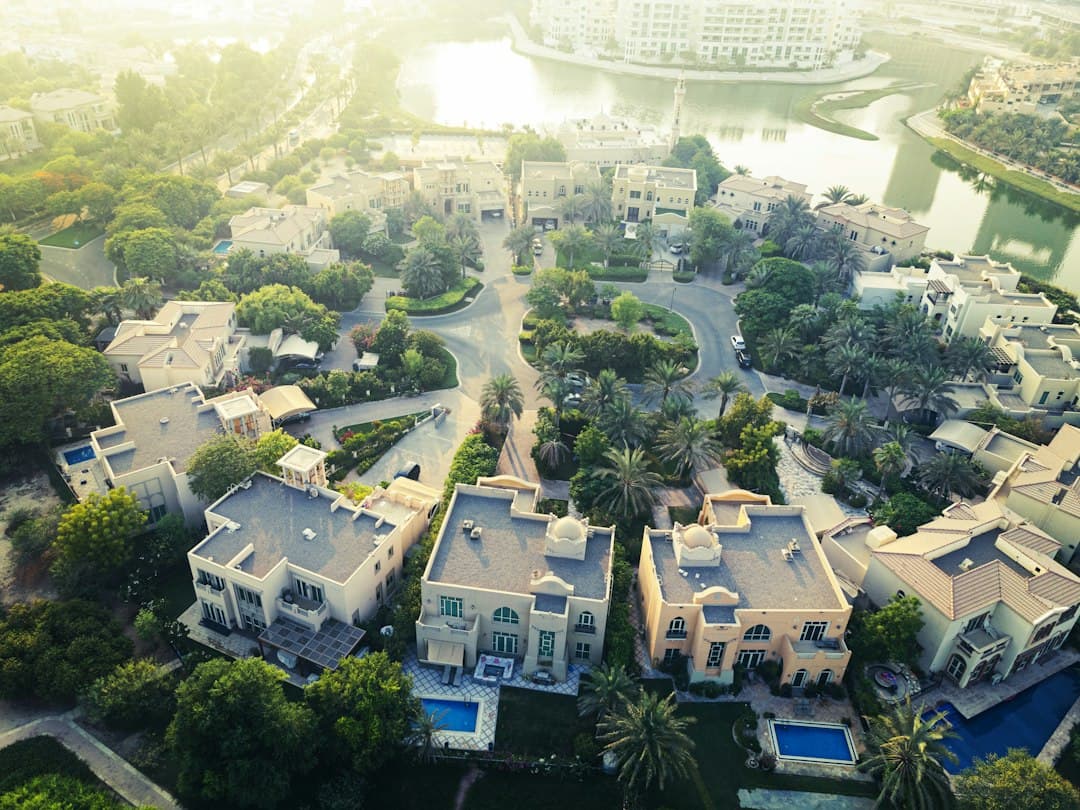
Villas and apartments in Dubai deliver fundamentally different living experiences. Villas offer private outdoor space, larger floor plans, and greater autonomy over your environment—but come with higher purchase prices, annual maintenance costs, and DLD transfer fees. Apartments provide walkable communities, lower upfront costs, minimal maintenance responsibility, and easier rental management. Your choice depends on family size, lifestyle priorities, long-term residency plans, and capital available. First-time buyers often find apartments more practical; established families with equity frequently prefer villa living. Both property types appreciate over time and generate rental income, but the day-to-day experience, financial obligations, and community structure differ significantly.
Space, Layout, and Privacy: The Core Lifestyle Difference
Villa living in Dubai means private outdoor space you control entirely. A typical 3–4 bedroom villa includes a garden (sometimes 3,000+ sq ft), dedicated parking, a private driveway, and often a pool or terrace. Your neighbors are at distance; noise and visual privacy are substantially higher than apartment living. You're not sharing a building lobby, elevator, or common corridors with dozens of families daily.
Apartments concentrate living into vertical space. A 2–3 bedroom apartment occupies 1,200–1,800 sq ft total, with a shared lobby, hallway, and often a small balcony as your only outdoor area. You share plumbing, electrical systems, and structural walls with neighbors above, below, and beside you. This density creates walkable communities—shops, cafes, and amenities are steps away—but reduces privacy and autonomy.
For families with children and outdoor entertaining, villas dominate. For young professionals, couples, and those prioritizing urban convenience, apartments win. The psychological difference is substantial: villa living feels independent; apartment living feels connected to a broader community.
Financial Reality: Purchase Price, Fees, and Long-Term Cost
Dubai villa prices vary wildly by location. In established communities like Arabian Ranches, expect AED 2.5–5 million for a 3–4 bedroom villa. Emerging areas like Dubai South or Jumeirah Village Circle offer villas from AED 1.2–2 million. Premium waterfront locations on Palm Jumeirah exceed AED 10 million.
Comparable apartments cost significantly less. A 2-bedroom in Business Bay or Downtown Dubai runs AED 800,000–1.5 million. The same in Jumeirah Village Circle or Dubai South costs AED 400,000–700,000. Entry-level studios start at AED 180,000–250,000 in developing neighborhoods.
But purchase price tells only half the story. DLD transfer fees, registration costs, and agency commission apply equally to both—use our Dubai Property Fees Calculator to estimate your true acquisition cost. The real financial difference emerges in annual expenses:
- Villas: Annual maintenance (pool, garden, AC units, exterior repairs), property tax, and community fees (AED 15,000–40,000 annually) are your responsibility. No shared service charges; no economies of scale.
- Apartments: Service charges (AED 15–50 per sq ft annually) are pooled across hundreds of units. Individual maintenance is minimal unless you own a penthouse or ground-floor unit with a garden.
Over 10 years, apartment owners typically pay less in cumulative maintenance, despite monthly service charges. Villa owners face unpredictable repair costs—a new chiller, pool resurfacing, or roof repairs can cost AED 20,000–100,000+ suddenly. Apartments isolate you from these surprises.
Maintenance and Upkeep: Who Fixes What
Villa ownership means you manage everything. Cracks in the driveway, a faulty garden gate, landscaping, pest control, exterior painting—all your responsibility and expense. Your AC compressor fails in August? You call the technician and pay for emergency service. Many villa owners underestimate the hidden labor and cost of maintaining a property with outdoor components in Dubai's heat and humidity.
Apartment ownership is cleaner administratively. The building management company handles lobby maintenance, common area cleaning, exterior repairs, and major infrastructure (elevators, electrical mains, water pressure). Your responsibility is limited to the interior: your HVAC wall unit, kitchen appliances, and cosmetic finishes. If something communal fails—the lobby AC or water system—management addresses it, and costs are spread across all residents.
This difference is often overlooked by first-time buyers. Villas demand more engagement and decision-making; apartments offer passive ownership if you prefer a hands-off approach.
Community and Lifestyle: Connectivity vs. Independence
Apartment living naturally fosters community. Shared amenities (gyms, pools, playgrounds, lounges) mean you see neighbors regularly. Events and activities center on the building or community. Schools, shops, and restaurants are typically walking distance. This is especially true in Jumeirah Village Circle, where apartments surround a vibrant central plaza with retail, dining, and leisure venues.
Villa communities vary. Some, like Arabian Ranches or Dubai Hills Estate, are gated master-planned developments with clubhouses, pools, and community programs. You do encounter neighbors, but at greater distance. Other villa areas are more scattered; you may have little community interaction beyond friendly waves. The sense of "belonging" to a place is weaker in standalone villas.
Families with young children often thrive in apartment communities; the proximity to amenities and other families creates natural social networks. Independent-minded owners or those seeking solitude prefer villas.
Rental Income and Investment Potential
Both villas and apartments generate rental income in Dubai's strong tenant market. However, the dynamics differ:
- Apartments: High turnover, predictable tenant profiles, easier management, and lower vacancy rates. A 2-bedroom apartment in Jumeirah Village Circle or Business Bay rents for AED 60,000–90,000 annually. Management companies handle tenant sourcing, contracts, and collections for 4–5% commission. Furnished apartments rent faster.
- Villas: Lower turnover, longer average tenancy (families stay 2–3 years), higher rental yields (AED 100,000–200,000+ annually), but more direct management burden. You deal directly with tenant issues, maintenance requests, and longer vacancy periods between leases.
Apartment yields typically range 4–6% annually; villa yields reach 5–8%, depending on location and condition. The trade-off: villas require more active landlord involvement. If you want passive income, apartments are simpler.
Resale, Appreciation, and Market Demand
Both property types appreciate in Dubai, but growth patterns differ. Established villa communities like Arabian Ranches and Palm Jumeirah have seen consistent 3–5% annual appreciation. New villa areas grow faster initially, then stabilize. Apartments in premium locations (Downtown Dubai, Dubai Marina) appreciate steadily; emerging communities appreciate faster as infrastructure matures.
Resale liquidity is faster for apartments. More buyers look for apartments than villas; you'll find buyers more quickly. Villas attract a narrower buyer pool (families, wealthy expatriates, investors seeking rentals). Selling a villa in an emerging area can take 6–12 months; apartments often sell within weeks.
If you may relocate within 5–7 years, apartments offer lower exit friction. If you're investing for 10+ years, both perform well—but villa appreciation is less predictable.
Practical Considerations: Chiller, DEWA, and Setup
Villa buyers must arrange and pay for a private chiller (AC cooling system) before or immediately after handover. Cost: AED 15,000–35,000. Apartments typically include centralized cooling in service charges. Apartments mean fewer independent utility arrangements; everything channels through a single meter.
After buying property in Dubai, both villa and apartment owners must register with DEWA (electricity and water), arrange internet, and complete DLD registration. But villa owners face additional tasks: arrange a chiller company, landscape decisions, and potentially pest control contracts. The administrative burden is heavier for villas.
Which Should You Choose?
Choose a villa if you prioritize:
- Privacy and outdoor space for family entertaining
- Long-term residency (5+ years) with stable income to cover maintenance
- Higher rental yields and multi-generational space
- Willingness to engage in direct property management
Choose an apartment if you prioritize:
- Walkable urban lifestyle and community connection
- Lower upfront costs and predictable annual expenses
- Minimal maintenance responsibility and passive income
- Flexibility to relocate within 5–7 years
- First-time home buying or uncertain long-term plans
Neither choice is "right" universally. The best decision aligns your property with your actual lifestyle, family stage, and financial capacity—not aspirational ideas of what villa or apartment living "should" be.
Explore Your Options
Ready to compare specific properties? Browse all villas and apartments available across Dubai, or explore specific neighborhoods. Contact Immoworld DXB's advisory team to discuss your priorities and find the property type that genuinely fits your life.