
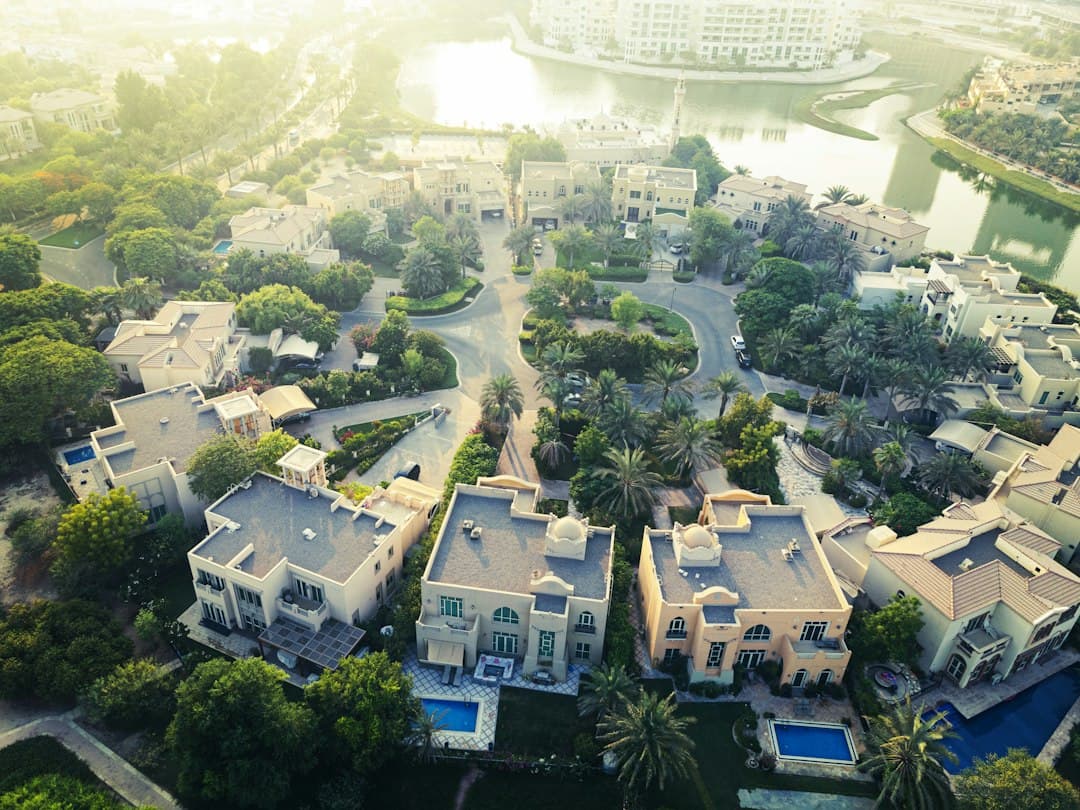
Jumeirah Village Circle (JVC) and Jumeirah Village Triangle (JVT) are Dubai's two most affordable master-planned residential communities, both developed by Dubai Properties. JVC is larger, more mature, and more walkable, with stronger rental demand and slightly higher entry prices. JVT is smaller, newer, quieter, and more affordable, making it ideal for first-time buyers seeking value. The choice depends on your priorities: JVC suits investors prioritizing rental income and established lifestyle amenities; JVT suits budget-conscious buyers and families wanting a calmer environment without premium location markup.
Understanding the Two Jumeirah Villages
Dubai's Jumeirah Village communities occupy a unique position in the city's residential market. Both emerged as genuine alternatives to Dubai's premium, high-priced neighborhoods, offering modern apartments, family-friendly amenities, and realistic entry-level pricing. Yet despite similar names and the same master developer, JVC and JVT are distinctly different neighborhoods with separate identities, infrastructure, and investment profiles.
This distinction matters because your choice between them will influence your daily lifestyle, long-term financial returns, and community experience for years to come. Understanding what genuinely separates these two will help you invest confidently.
JVC: Mature, Walkable, Investment-Proven
Community Layout and Walkability
Jumeirah Village Circle is the original and larger of the two, comprising approximately 40 towers arranged in a circular master plan. This design creates a naturally walkable environment where retail, dining, and parks are accessible without a car. Residents can walk from their apartments to the central community hub, gardens, and schools—a rarity in Dubai.
The circular layout also means most residents live relatively close to central amenities. You're never more than a 15-minute walk from shops, cafés, or green space, which appeals to car-free lifestyle seekers and families with children.
Pricing and Entry Barriers
JVC pricing reflects its maturity and established demand. Studio apartments start around AED 420,000–520,000; 1-bedroom units range from AED 550,000–750,000; and 2-bedroom apartments typically cost AED 750,000–1.2 million. Larger units and premium locations command more. Service charges are moderate, averaging AED 13–18 per sq ft annually.
These prices are lower than Dubai Marina or Downtown Dubai, but higher than JVT or emerging communities like Dubai South. JVC attracts buyers willing to pay a modest premium for an established address and proven rental market.
Rental Income and Investor Appeal
JVC's strongest selling point for investors is consistent rental demand. The community's 15+ years of stability, walkable design, and proximity to schools and workplaces make it reliably attractive to tenants. Furnished 1-bedroom apartments typically rent for AED 32,000–42,000 annually; 2-bedroom units command AED 48,000–65,000. Gross yields often exceed 4–5%, making JVC a practical income-focused investment.
Because the market is established, vacancy rates are predictable and managed. New investors entering JVC expect reliable, if modest, returns rather than speculative appreciation.
Lifestyle and Community Feel
JVC residents describe the community as vibrant but manageable. The circular design creates natural gathering points. Central gardens host weekend markets and events. Schools, hospitals, and gyms are embedded within the community. Young professionals, small families, and empty-nesters often choose JVC for its urban-village feel without Dubai's usual car dependency.
The trade-off is density. You're living in a busy, popular community. Parking is often challenging during peak hours, and common areas can feel crowded on weekends.
JVT: Emerging, Quieter, Better Value
Community Layout and Scale
Jumeirah Village Triangle is newer, smaller, and arranged in a triangular configuration with a more spacious, lower-density feel. Towers are positioned farther apart, with broader streets and more open space between buildings. This creates a quieter, less congested environment—but with a trade-off: fewer services are within walking distance.
Unlike JVC's walkable-community model, JVT residents rely more on cars for shopping, dining, and entertainment. The broader streets feel less urban; the community feels more like a residential enclave than a self-contained neighborhood.
Pricing and Entry Barriers
JVT pricing is genuinely lower than JVC, reflecting its relative newness and lower walk-ability. Studio apartments start around AED 300,000–420,000; 1-bedroom units range from AED 380,000–580,000; and 2-bedroom apartments typically cost AED 500,000–850,000. Service charges are comparable to JVC, averaging AED 12–16 per sq ft annually.
For first-time buyers with strict budgets, JVT often provides 15–25% more buying power than JVC. This pricing advantage is JVT's defining feature for cash-constrained investors and owner-occupiers.
Rental Income and Investor Appeal
JVT's rental market is younger and less proven than JVC's. Furnished 1-bedroom apartments rent for approximately AED 26,000–36,000 annually; 2-bedroom units command AED 38,000–52,000. Gross yields are typically 3–4.5%, slightly below JVC's average.
However, JVT is becoming more attractive to tenants as the community matures. Investors buying now at lower prices may see rental appreciation as the neighborhood establishes itself. The risk is higher than JVC, but the potential upside is stronger for patient, value-focused investors.
Lifestyle and Community Feel
JVT attracts residents seeking quieter, more spacious living without urban bustle. Families with children, remote workers, and buyers prioritizing peace over walkability often prefer JVT. The community is developing retail and amenities, but at a slower pace than JVC.
The trade-off is isolation. You need a car for most errands. Central services are fewer. Weekend entertainment happens outside JVT. This suits some buyers but frustrates others accustomed to urban convenience.
Direct Comparison: Key Factors
Which Should You Choose?
Choose JVC If:
- You prioritize rental income and want proven returns over speculative appreciation.
- You value walkability and prefer minimizing car use in daily life.
- You want established infrastructure, schools, and services nearby.
- You're comfortable with a busier, more urban community environment.
- You can afford the entry-price premium for market maturity and tenant reliability.
Choose JVT If:
- You're a first-time buyer with a strict budget seeking maximum purchasing power.
- You prefer a quieter, more spacious residential feel over urban convenience.
- You're willing to trade walkability for a car-based lifestyle.
- You believe in long-term appreciation as the community develops.
- You value potential capital growth over established rental income.
Investment Perspective: Growth vs. Income
JVC is fundamentally an income play. The market is mature, prices are stable, and rental returns are predictable. Capital appreciation is modest—typically 2–4% annually. If you're buying JVC, you're buying cashflow, not betting on explosive growth. This suits investors seeking steady income over time.
JVT is a growth play. Entry prices are lower, the community is still developing, and patient investors may see better appreciation as infrastructure improves and tenant demand rises. However, rental yields are lower, and you're taking on more market risk. This suits investors with longer time horizons and stronger conviction in the neighborhood's trajectory.
Both are legitimate strategies. Neither is inherently better—the choice depends on your investment philosophy, risk tolerance, and financial goals.
Practical Considerations: Costs and Fees
When calculating your total purchase cost in either community, remember to factor in DLD transfer fees, property registration, and agency commission. Use our Dubai Property Fees Calculator to estimate exact costs based on your property price. Typical expenses include DLD transfer fees (4% of purchase price), real estate commission (1–2%), and registration charges.
Service charges in both communities are reasonable—typically AED 12–18 per sq ft annually—which is below Dubai average. Chiller costs are separate and variable depending on usage.
Looking Ahead: 2026 and Beyond
Both JVC and JVT are stable markets with limited speculative upside. New supply is slowing in both communities. JVC will likely remain a solid, conservative investment with predictable 4–5% rental yields. JVT may see faster tenant growth and community development, but pricing appreciation will remain modest.
For 2026 buyers, both communities offer realistic entry-level pricing compared to Dubai's premium neighborhoods. The question isn't which is better absolutely—it's which aligns with your priorities: proven income (JVC) or value and growth potential (JVT).
Expert Resources for Your Decision
Before committing, explore our detailed Jumeirah Village Circle area guide and review current market listings across both communities. Understanding exact pricing, available units, and developer plans will strengthen your decision. Contact our advisory team to discuss your specific situation—whether you're buying for income, appreciation, or owner-occupancy—and we'll help you evaluate which community truly fits your needs. You can also browse current properties for sale in both areas to compare listings directly and see what's actually available in your budget.
Final Thoughts
JVC and JVT aren't competitors—they're complementary options serving different buyer needs. JVC is Dubai's most walkable, income-focused residential community; JVT is an emerging alternative offering better value without sacrificing modern design or amenities. Choose JVC if you want established returns and urban convenience. Choose JVT if you want maximum buying power and believe in the neighborhood's long-term growth. Either way, you're investing in a master-planned community with proven demand, professional management, and genuine affordability—advantages that matter in Dubai's premium real estate landscape.