
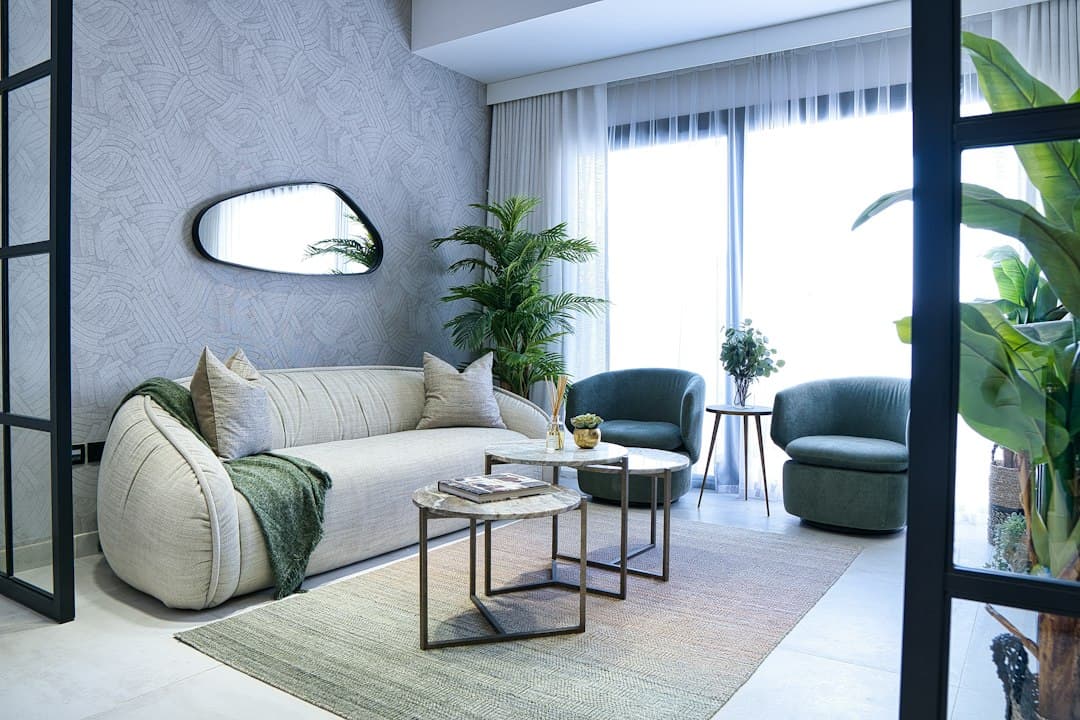
Furnishing your first Dubai apartment on a budget requires strategic planning, smart shopping, and knowing where to compromise on quality versus where to invest. Budget furnishing typically ranges from AED 15,000 for a studio to AED 40,000–AED 60,000 for a two-bedroom apartment, depending on your priorities and where you shop. The key is understanding essential versus optional items, identifying affordable retailers, and avoiding impulse purchases that drain budgets quickly.
Understanding Your Budget Furnishing Baseline
When you first take possession of your new Dubai apartment, you're starting with bare walls and empty rooms. Your immediate furnishing priorities are furniture that serves a practical function—a bed to sleep on, a sofa to sit on, and a dining table—not decorative pieces. Most first-time buyers underestimate how quickly costs climb when they start adding cushions, artwork, lighting, and accessories.
A realistic budget framework breaks down like this: allocate 40% of your furnishing budget to bedroom furniture, 30% to living and dining areas, and 30% to kitchen essentials, lighting, and accessories. This prioritization ensures you have a functional home immediately, with flexibility to add refinements later as your budget allows.
Where to Shop for Affordable Furniture in Dubai
Dubai has matured significantly as a retail market, and savvy shoppers know that premium price tags don't always reflect quality. Several retailers dominate the budget-friendly segment:
- IKEA (Al Quoz): The go-to for affordable, flat-pack furniture. Quality is basic but serviceable for renters and first-time owners. Expect AED 500–2,000 per major piece.
- Ace Furniture: UAE-based retailer offering locally-made pieces at mid-range prices. More durable than IKEA for similar price points.
- Homes R Us: Wide selection of budget mattresses, sofas, and dining sets. Frequent promotions during summer and year-end sales.
- Lulu Hypermarket & Carrefour: Surprisingly good for kitchen basics, storage units, and small appliances at competitive prices.
- Online marketplaces (Dubizzle, Facebook Marketplace): Second-hand furniture from expat departures. Can save 50–70% on gently-used pieces if you're comfortable with pre-owned items.
The key advantage of online second-hand markets is that Dubai's expat turnover is constant—furniture that's only 2–3 years old regularly comes onto these platforms as people relocate. Quality is often excellent, and sellers are motivated to move items quickly.
Room-by-Room Budget Breakdown
Master Bedroom
A bed frame and mattress are non-negotiable. Budget AED 2,500–4,000 for a comfortable queen-size bed; IKEA and Homes R Us offer solid options in this range. Add two basic nightstands (AED 400–600 each), a small dresser (AED 800–1,200), and basic bedding (AED 300–500). Total: approximately AED 5,500–7,000.
Resist the temptation to buy matching bedroom sets from premium retailers—you'll pay 40–50% more for the same functionality as mixing and matching budget pieces. Lighting is essential; invest in a good bedside lamp or two (AED 150–300 total) rather than relying on ceiling fixtures alone.
Living Room
A sofa is the largest living room expense. Budget AED 3,000–5,000 for a serviceable three-seater or sectional from IKEA, Ace, or Homes R Us. A basic coffee table (AED 400–800) and TV stand (AED 600–1,000) complete the essentials. If you need a second seating piece, a simple armchair runs AED 800–1,500.
Skip expensive accent chairs and side tables initially. After living in your space for 3–4 months, you'll have a much clearer sense of what layout and additional pieces actually work for your lifestyle. Total living room budget: AED 4,800–8,300.
Kitchen and Dining
Most Dubai apartments come with a kitchen fitted with cabinets and appliances, so major kitchen furniture is usually unnecessary. Focus instead on essentials: a dining table (AED 800–1,500 for a four-seater) and four chairs (AED 200–400 per chair). Storage and organization items like shelving units or small island carts run AED 300–800.
In the kitchen itself, prioritize high-use small appliances: a kettle (AED 80–150), microwave if not included (AED 400–700), and basic cookware. Avoid the impulse to buy specialty gadgets you've never used. Total kitchen and dining: AED 2,500–4,500.
Guest Bedroom or Second Bedroom
If you have a second bedroom, furnish it minimally initially. A basic bed frame and mattress (AED 2,000–3,000), a small storage unit (AED 400–700), and basic bedding will suffice. You can upgrade later when budget allows. Total: AED 2,500–4,000.
Smart Money Moves for Budget Furnishers
Time Your Shopping Around Sales Cycles
Dubai's major furniture sales happen during summer (June–August) and end-of-year clearance (November–December). If you can delay furnishing your apartment by a few weeks to catch these sales, you'll see 20–40% discounts on items that would otherwise stretch your budget. Many retailers also run promotional cycles during Ramadan and National Day.
Invest in Quality Where It Matters Most
Don't cheap out on items you use daily. A mattress is where you spend a third of your life—AED 2,500–3,500 for a quality mattress pays dividends in sleep quality and durability. Similarly, a sturdy dining table you'll eat at every day justifies a slightly higher spend than decorative pieces. Conversely, decorative shelving, side tables, and accent furniture can absolutely be budget-conscious—these are easier and cheaper to replace later.
Use Vertical Space to Minimize Furniture Bulk
Dubai apartments can feel cramped if you fill them with large, heavy pieces. Tall storage units, wall-mounted shelving (often available at IKEA for AED 150–500), and hanging organizers reduce the need for multiple standalone furniture pieces and cost significantly less.
Negotiate Second-Hand Prices
When buying pre-owned furniture via Dubizzle or Facebook, prices listed are often starting points, not fixed prices. Reasonable sellers expect and accept offers 10–20% below asking price, especially if you're buying multiple items or arranging pickup quickly.
Hidden Costs First-Time Buyers Often Miss
Beyond furniture, several costs surprise new apartment owners:
- Delivery and assembly: Most retailers charge AED 200–500 per delivery. Coordinating multiple deliveries into one trip saves money; IKEA assembly costs extra (typically AED 100–200 per item if you don't DIY).
- Curtains and blinds: Window treatments are essential for privacy and temperature control. Budget AED 300–800 per window for basic curtains or roller blinds.
- Lighting fixtures: Beyond the bed and living room lamps, consider floor lamps and task lighting. Budget an additional AED 500–1,000 for adequate lighting throughout.
- Rug or floor mats: A basic area rug (AED 400–1,000) defines spaces and adds comfort without major structural changes.
- Basic tools and hardware: Nails, screws, a hammer, and a drill (if not already owned) cost AED 200–500 total and are invaluable for assembling and hanging items.
Furnished vs. Unfurnished: The Financial Reality
When comparing furnished vs. unfurnished apartments, remember that pre-furnished units come at a premium price. A furnished two-bedroom in a mid-range Dubai community might cost AED 2,000–2,500 monthly, while an identical unfurnished unit rents for AED 1,400–1,800. Over a typical two-year lease, that premium accumulates to AED 14,400–16,800. Furnishing that unfurnished apartment yourself for AED 40,000–50,000 is economically justified if you plan to stay longer than 18–20 months—and you own the furniture after you leave, unlike a pre-furnished lease.
For deeper insight into this decision, our 2026 cost breakdown for furnishing a 2-bedroom apartment provides real market pricing across quality tiers and shows exactly where to expect price variations.
Final Setup Priorities: What You Actually Need Day One
Resist the urge to furnish everything at once. On moving day, prioritize only these essentials:
- Bed, mattress, and basic bedding
- Basic sofa or seating for the living room
- Dining table and chairs (or a small side table if space is tight)
- Basic lighting (bedside and living room lamps)
- Kitchen essentials: kettle, cookware, plates, cutlery
- Curtains or blinds for privacy
- Storage solutions (wardrobe or basic shelving)
Everything else—decorative artwork, accent furniture, specialized kitchen gadgets, throw pillows—can be added gradually as you settle in and understand your actual needs. This phased approach also spreads costs across multiple months, easing cash flow pressure immediately after property purchase.
Leveraging Developer Communities and Amenities
When evaluating available apartment listings, consider that newer developments often come with substantial community amenities included. If your building has a well-equipped gym, swimming pool, kids' play areas, and co-working spaces, you save money by not needing to furnish or equip your apartment for activities you'll do in common areas. Conversely, if you're purchasing in an older community with minimal shared facilities, your apartment needs to do more work, potentially justifying a slightly higher furnishing budget for comfort pieces like a quality sofa or additional storage.
Explore which Dubai communities and neighborhoods align with your lifestyle and budget to ensure your apartment furnishing decisions support how you'll actually live there.
Conclusion: Smart Furnishing, Not Cheap Furnishing
Budget furnishing your first Dubai apartment is entirely achievable without compromising comfort or quality. The difference between smart budget shopping and penny-pinching is strategic prioritization: invest in items you use daily, save on decorative pieces, time your purchases around sales, and don't hesitate to buy second-hand where quality is apparent. A well-furnished apartment on AED 40,000–50,000 will serve you far better than an overstuffed space where every purchase was an impulse buy.
If you're still evaluating which property to furnish or want to calculate your total acquisition costs including DLD transfer fees, our Dubai property fees calculator provides transparent breakdowns. For personalized guidance on selecting an apartment that fits both your budget and lifestyle, reach out to our advisory team—we'll help you find a home worth furnishing.