
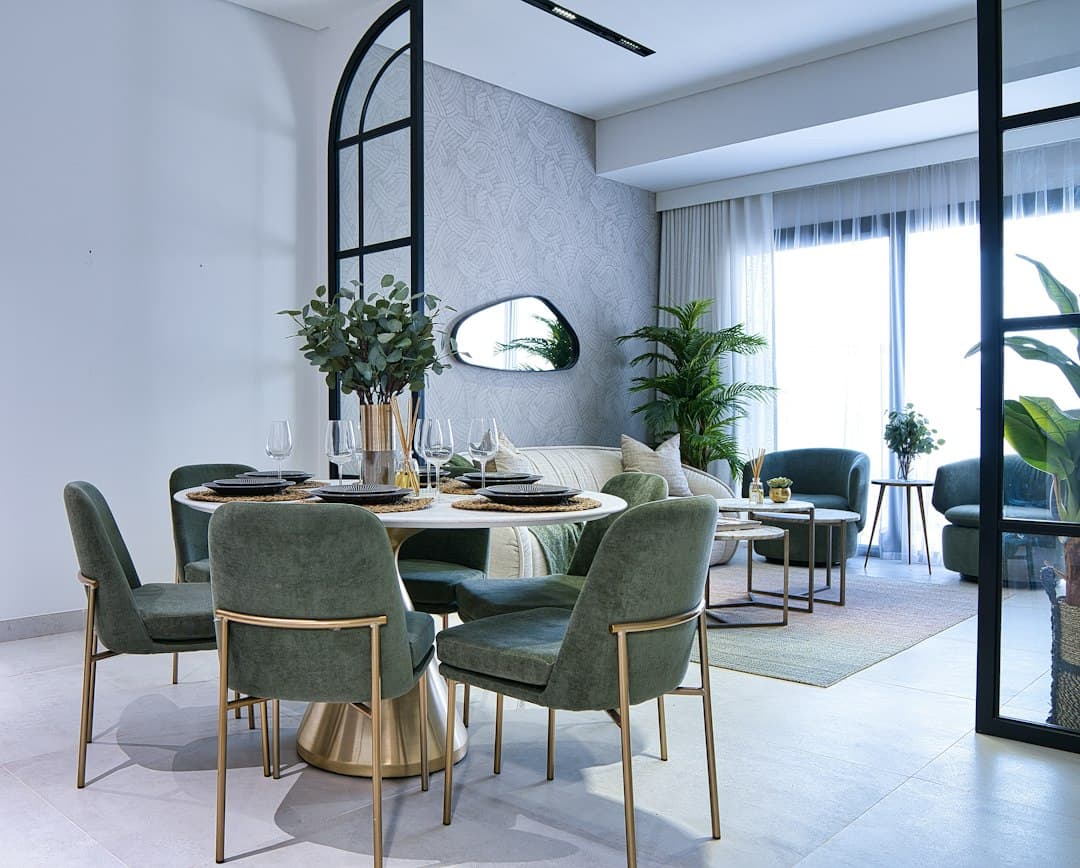
Professional interior designers approach apartment decoration through a proven framework: establishing a cohesive color palette, prioritizing quality lighting, understanding spatial proportions, and selecting purposeful furnishings that balance aesthetics with function. You don't need a design degree or unlimited budget to apply these methods to your Dubai apartment—what matters is understanding the principles that designers use and executing them systematically. This guide walks you through the exact techniques that create the polished, intentional look professionals deliver.
Start with a Cohesive Color Palette
Every professionally designed space begins with color choices, not random selections. Interior designers in Dubai typically build around a 60-30-10 rule: a dominant color (60 percent of the space), a secondary accent (30 percent), and a highlight color (10 percent).
For Dubai apartments, neutral base colors—warm whites, soft beiges, light grays—dominate because they maximize light and make smaller spaces feel larger. This is especially important in high-rise apartments where natural light varies throughout the day. Once your base is set, choose one or two accent colors that complement your lifestyle and the Dubai aesthetic.
Dubai interiors often lean toward warm metallics (brass, warm gold) rather than cool silvers, paired with natural materials like warm wood tones and soft textiles. Look at 2026 interior design trends for Dubai apartments to see which palettes align with current market preferences—this matters if you ever plan to rent out or sell your space.
Apply the Color Rule Consistently
Paint your walls and large furniture in your dominant color. Introduce your secondary color through textiles: curtains, rugs, cushions. Use your highlight color sparingly—artwork, a single accent chair, decorative objects. This restraint is what separates professional spaces from cluttered ones.
Master Lighting Like a Professional
Poor lighting ruins even beautifully furnished apartments. Professional designers layer three types of light: ambient (general illumination), task (functional light for activities), and accent (mood-setting highlights).
In Dubai apartments, natural light during morning and evening is often strong, but midday sun can be harsh. Use sheer curtains or smart glass solutions to diffuse direct sunlight rather than block it entirely. For artificial lighting, avoid relying on a single ceiling fixture—this creates unflattering shadows and makes spaces feel flat.
Build a Lighting Plan Room by Room
- Living Room: Combine a statement ceiling fixture (ambient), table lamps on side tables (task), and wall-mounted uplights or accent lights behind art (accent).
- Bedroom: Use bedside lamps for reading, indirect lighting above or behind the headboard, and soft ambient light from a dimmer-controlled fixture.
- Kitchen/Dining: Under-cabinet lighting (task), a pendant or chandelier above the table (ambient), and accent lighting on open shelving or artwork.
- Bathrooms: Ensure adequate light around mirrors (task), and consider soft downlights or wall sconces for relaxation.
Invest in warm-toned LED bulbs (2700K color temperature) for living spaces and cooler tones (4000K) for kitchens. Dimmers on most fixtures give you flexibility—professional spaces feel different at different times of day.
Plan Your Furniture Layout for Space and Flow
Interior designers measure twice and place furniture once. They understand that scale, proportion, and traffic flow determine whether a space feels cramped or comfortable—not just the amount of furniture.
In Dubai apartments, especially high-rises with open-plan layouts, this principle is critical. Measure your rooms, note natural entry points and windows, and imagine how people move through the space. Furniture should create conversation zones and clear pathways, not block windows or doorways.
The Golden Rules of Furniture Placement
Anchor with a large piece: A sofa, bed, or sectional should be your visual anchor. Everything else balances around it. Leave at least 45 centimeters of space between the sofa and a coffee table or media console—enough to walk around comfortably.
Float furniture away from walls: Professional designers rarely push all furniture against walls. Instead, they create a seating arrangement in the room's center, leaving circulation space around the perimeter. This makes apartments feel larger and more intentional.
Layer rugs thoughtfully: A rug under your main seating area (large enough so sofa legs sit on it, not just the front feet) anchors that zone and adds warmth. In open-plan layouts, a rug defines separate functional areas—dining, living, work—without walls.
Use furniture heights for visual interest: Mix tall pieces (shelving, standing lamps) with low pieces (low-profile sofas, coffee tables) to avoid a monotonous, flat appearance.
Choose Furniture and Decor Deliberately
The difference between amateur and professional decoration isn't always budget—it's intentionality. Professionals select fewer, higher-quality pieces rather than filling space with trends.
For your Dubai apartment, prioritize investment pieces: a solid sofa in a neutral color, a quality bed frame, a dining table that reflects your lifestyle. These anchors last years and adapt to changing accent colors and decor.
Where to Shop for Designer-Quality Pieces on Any Budget
Dubai has retail options across all price points. For practical guidance on balancing quality and cost, see where to shop for home decor in Dubai on every budget. Retailers like IKEA and PAN Home offer affordable foundations; boutique showrooms in communities like Jumeirah Village Circle carry mid-range pieces with better design coherence. High-end showrooms in Design District and Bluewaters stock luxury brands if your budget allows.
Buy what lasts first (sofa, bed, dining table), then invest in quality textiles and lighting. Decor objects—artwork, plants, decorative books—can be found affordably and changed seasonally to keep your space fresh.
Use Vertical Space and Layered Styling
Professionals maximize vertical space, especially in Dubai's high-rise apartments with limited floor area. Tall bookshelves, wall-mounted shelving, and art hung at eye level draw the eye upward and make rooms feel taller.
Styling shelves and surfaces requires restraint. Avoid the cluttered look by following the "rule of three": group items in odd numbers, mix heights and textures, and leave negative (empty) space. A shelf with five books, two plants of different sizes, and a decorative object looks curated; the same shelf packed tightly looks chaotic.
Layer Textiles for Warmth and Depth
Dubai's modern architecture can feel cold without soft elements. Layering textiles—throw pillows in varying textures, area rugs, curtains, blankets—adds warmth and visual richness. Choose coordinating colors from your palette: if your base is warm gray and accent is deep teal, select pillows in cream, light gray, teal, and perhaps one in a warm gold or natural linen.
Incorporate Biophilic Design Elements
Dubai's interior design trends increasingly include plants and natural materials. Beyond aesthetics, greenery improves air quality in closed apartments and adds a living, dynamic element that static decor cannot match.
Select low-maintenance plants suited to Dubai's climate: snake plants, pothos, ZZ plants thrive indoors with minimal care. Place them at different heights—on shelves, stands, and floor corners—rather than clustering them. A single large plant (like a fiddle leaf fig or monstera) can anchor a corner and become a design statement.
Personalize Without Overwhelming
Professional spaces aren't sterile—they reflect their inhabitants while maintaining visual calm. Personal touches should be intentional: a carefully curated gallery wall, family photos in matching frames on a floating shelf, a collection displayed on open shelving.
Avoid displaying too many personal items at once. Rotate decor seasonally, and store pieces you don't immediately love. This approach keeps your space feeling fresh and prevents it from appearing cluttered or dated.
Consider Your Apartment's Specific Characteristics
Dubai's apartment stock varies widely—from older communities to brand-new developments. If you're in a new build property with high ceilings, maximalist design works; lower ceilings benefit from lighter colors and minimalist furnishing. Corner units with wraparound windows allow bolder colors; north-facing units need warmer palettes to compensate for cooler light.
Understanding your apartment's natural light, ceiling height, and layout is the foundation of every professional design decision.
Invest Strategically Based on Your Timeline
If you're uncertain about your long-term plans in Dubai, consider whether renting or buying furniture makes more sense for your first year. Renting premium pieces lets you experiment with layouts and styles before committing capital. Once you're settled, investing in quality furnishings—even gradually—creates a space that feels genuinely yours.
Understanding the full cost of moving into and decorating an apartment also helps. Beyond furniture, factor in DLD transfer fees, utilities setup, and other administrative costs so your decoration budget is realistic.
Final Thoughts: The Professional Approach Isn't About Perfection
The apartments designed by professionals look polished because they follow principles—not because they're perfect. Color coherence, intentional lighting, considered furniture placement, and restrained layering create spaces that feel intentional and calm, regardless of budget.
Start by identifying your dominant color and the light sources in your apartment. Then select a few quality anchor pieces and build around them. Edit ruthlessly; empty space is your ally. Add personal elements thoughtfully. Over time, your apartment will develop the layered, intentional quality that separates designed spaces from randomly furnished ones.
If you're buying or renting a new apartment in Dubai and want professional guidance on neighborhoods and property options, get in touch with Immoworld DXB's advisory team. We can help you find a home whose layout and light support your design vision from day one.